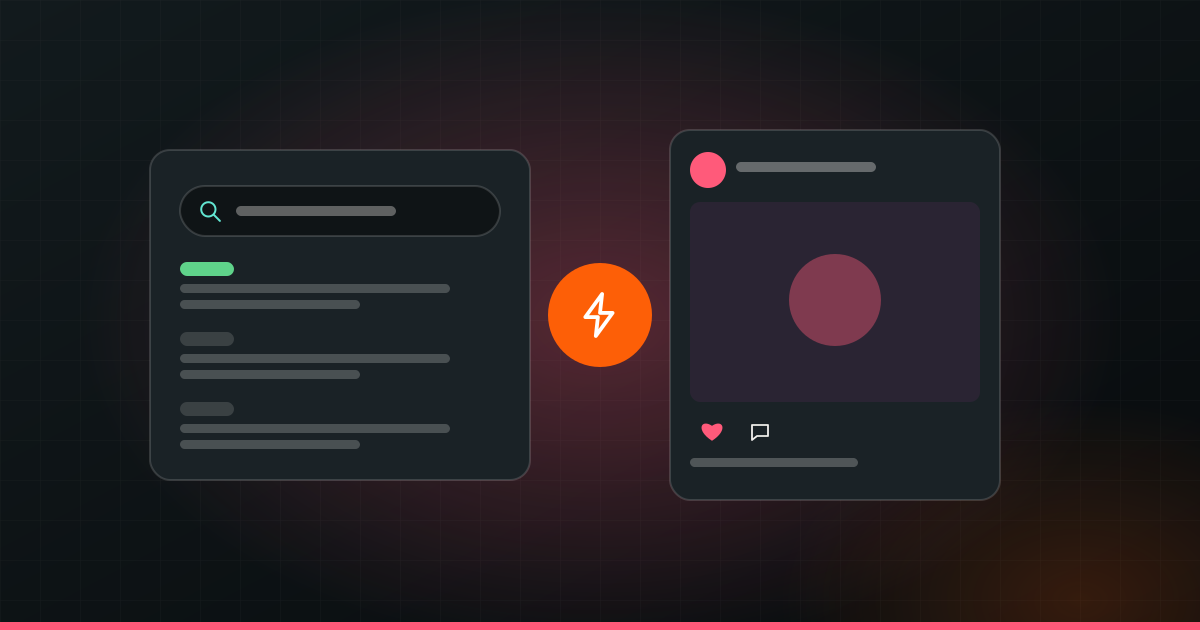
Short answer: Google Ads catches people who are already searching for what you sell. Meta Ads (Facebook and Instagram) puts your business in front of people who are not searching yet, but might want what you offer once they see it. If your customers have an urgent need, start with Google. If your product sells on looks, taste or story, start with Meta. Many businesses end up using both, for different jobs.
Here is how to think about it, without the jargon.
The big difference: searching vs scrolling
On Google, the customer makes the first move. Someone types “dentist near me” or “AC repair in Pune”. They have a problem right now. Your ad shows up next to their search. This is called intent: the person has already told Google what they want.
On Meta, you make the first move. Someone is scrolling Instagram, watching reels from friends. Your ad appears between posts. They were not looking for you. Meta shows your ad because, based on their interests and behaviour, they look like someone who might care. This is discovery: you create the want, or remind them of it.
Neither is better. They do different jobs. Google is like being the first name someone sees the moment they go looking. Meta is like a well-placed poster on the street your ideal customer walks down every day.
Businesses that usually suit Google Ads
Google works best when people already know they need something and go looking for it.
- Urgent services: a plumber, an electrician, a locksmith, a pest control company. Nobody scrolls Instagram hoping to find a plumber. They search when the pipe bursts.
- Clinics and healthcare: “skin clinic in Indiranagar” or “physiotherapist near me”. The need is real and the search is specific.
- Local services people know by name: a CA firm, a driving school, a packers and movers company.
- Business buyers: someone searching “billing software for pharmacy” is usually a serious buyer, not a casual browser.
- Coaching centres at decision time: parents and students search for coaching when they are choosing, often around admission season.
The common thread: there are words people type, and those words show they are ready to buy. If nobody searches for what you do, because it is new or people do not know the word for it, Google has very little to show your ad against.
Businesses that usually suit Meta Ads
Meta works best when seeing the product makes people want it.
- Cafés and restaurants: a reel of your cold coffee being poured does more than any text ad.
- D2C brands: skincare, clothing, jewellery, home décor, snacks. People often buy these after seeing them, not after searching.
- Events and experiences: a workshop, a weekend trek, a salon’s opening week.
- New ideas people do not search for yet: if your product solves a problem people have not put into words, you need to show it to them.
- Local businesses building awareness: a new gym or bakery that wants the neighbourhood to know it exists.
Meta lets you choose who sees your ad by location, age and interests. So a café can reach food lovers within a few kilometres. That makes it useful even for very local businesses, not just brands that ship across the country.
The ad formats each one offers
The formats matter because they decide what content you need to make.
Google Ads includes:
- Search ads: text ads at the top of Google results. This is the main reason most small businesses use Google.
- Local and Maps ads: your business shown on Google Maps for nearby searches. These work best with a complete Google Business Profile.
- YouTube ads: video ads before or during videos. YouTube is owned by Google, so these run from Google Ads.
- Display ads: image banners on websites and apps in Google’s network.
- Shopping ads: product photos with prices, for online stores.
Meta Ads includes:
- Feed ads: image or video posts in Facebook and Instagram feeds.
- Reels and Stories ads: full-screen vertical video, where a lot of attention sits now.
- Carousel ads: several images people swipe through. Good for showing a range of products.
- Click-to-WhatsApp ads: the button opens a WhatsApp chat with you. Very useful in India, where many customers would rather chat than fill a form.
- Lead form ads: people share their name and number without leaving the app.
In short: Google needs the right words. Meta needs scroll-stopping visuals. Plan for the content you can actually make well, week after week.
Google Ads vs Meta Ads, side by side
| Google Ads | Meta Ads | |
|---|---|---|
| Who sees it | People searching for something specific | People scrolling Facebook and Instagram |
| Customer mindset | “I need this now” | “Oh, that looks good” |
| Best for | Urgent needs, clinics, local services, business buyers | Cafés, D2C brands, events, new products, awareness |
| What you need to make | Clear ad text and a fast landing page | Strong photos, short videos and reels |
| How you choose the audience | By the words people search and where they are | By location, age, interests and behaviour |
| Where people land | Usually your website or a call button | Website, WhatsApp chat, Instagram profile or an instant form |
| Biggest risk | Paying for searches that are not really buyers | Getting likes and views but no enquiries |
When it makes sense to use both
The two platforms cover different moments, so they work well together once you have the basics running.
- A D2C skincare brand can use Instagram reels to get discovered, then Google to catch people who later search the brand name or “vitamin C serum for oily skin”.
- A dental clinic can use Google for “dentist near me” searches, and Meta to tell people in the area about a teeth-cleaning check-up month.
- Retargeting: someone visits your website from a Google search but does not book. A few days later they see your Instagram ad and remember you. This is called retargeting, and it often brings back people who were nearly ready.
The catch: do not start with both on a small budget. Each platform needs enough spend and enough results to learn who responds. Split a small budget in two, and you often end up with two half-tests and no clear answer.
What decides how much you spend
There is no fixed price for an ad on either platform. Both work like an auction, and your cost depends on a few things:
- Competition: how many other businesses want the same searches or the same audience. Legal, finance and real estate tend to be crowded.
- Location: a big metro is usually more competitive than a small town.
- Quality: both platforms reward ads people find relevant and pages that load fast and match the ad.
- What you count as a result: a click is not a customer. Measure enquiries and sales, not just clicks.
How to start small without wasting money
- Pick one platform based on how your customers buy: searching or scrolling.
- Pick one offer and one action, like “book a free consultation” or “order on WhatsApp”.
- Fix where the ad sends people before you spend anything. A slow page or a WhatsApp nobody answers wastes every rupee. We cover this in 3 things to do before your first ad.
- Set a test budget and a test period you will stick to, and do not judge results after a day or two.
- Track enquiries, not likes. Know which ad brought which customer.
Tip: Before you spend on Google Ads, set up your free Google Business Profile with photos, hours and reviews. For many local businesses it brings enquiries on its own, and it makes your paid ads more convincing too.
If you have tried Instagram ads already and they did not bring customers, read why Instagram ads stop working. And if you want the bigger picture of how ads fit with content, SEO and branding, start with digital marketing explained.
Choosing the platform is the easy part. Getting results takes testing: different ads, different audiences, different offers, and honest tracking of what actually brings customers. That is the work our marketing team does every week for businesses like yours.